            |
Director: Kerry Conran
Stars: Gwyneth Paltrow, Jude Law, Giovanni Ribsi, Angelina Jolie
Genre: Science Fiction, Adventure
Sky Captain and the World of Tomorrow is a dieselpunk fan's dream come true, with an unforgettable visual style and a fun pulp-style adventure. The story concerns Joe "Sky Captain" Sullivan and his ex-lover Polly Perkins, a newspaper reporter. Together they aim to stop the mysterious Dr. Totenkopf, who they believe has been terrorizing the world with giant robots and is plotting to put an end to the world, and partake in an Indiana Jones-like adventure. Like many pulp adventure stories, the plot is simple yet somehow manages to make little sense. There's plenty of plot holes and questionable logic at play here. But a lot of it seems very intentional. The film is definitely an homage to old pulp adventure and detective stories. This is sort of a double-edged sword, though. While a homage can be enjoyable for fans of that which is being paid tribute to, that still doesn't necessarily excuse the inherited flaws. A poor plot is a poor plot regardless. In this way it can be hard for a homage to both pay tribute and avoid the unenjoyable aspects of that which it is tributing, all while maintaining the necessary style and themes. Sky Captain certainly does have a ridiculous plot that likely shatters most people's suspension of disbelief. And it does have cliched characters and plot elements. It certainly provides nothing you haven't seen before when it comes to those things. But all that doesn't hurt the film...too much. I felt it did detract from it a bit, because it was harder for me to care about the characters and the plot was terribly predictable, but at the same time it still managed to be fun. Really, you have to be in the right mind-state to overlook the flaws. You need to trick yourself into embracing the flaws; laugh at them. The most notable and indeed noticeable thing about the film is easily its visual style. Sky Captain, along with some other films like Sin City, is one of the earlier films to be shot entirely on a digital backlot, which means that it was entirely shot in front of a blue or greenscreen, with the entire background being computer generated. The benefits of this are obvious: you can achieve things you couldn't in real life, and on a smaller budget. The problem is that CGI mixed with live action often looks very fake and artificial. However, Sky Captain, like Sin City, bypasses this unwanted side-effect by employing a unique visual style that doesn't conform to realism. The visual style of Sky Captain is in a way simultaneously new and old. Impressive and cheesy. Good and bad. It nails the sci-fi pulp noir 1930s style, yes, but it also manages to look very...silly at the same time. This goes back to the idea that Sky Captain is in many ways intentionally bad. But yet, I wouldn't call its visuals bad, and they're actually very creative. It's hard to explain. It's like a cutscene from the video game Wing Commander III: its backdrops are very clearly fake and as a result it all looks kind of cheesy, but at the same time what it manages to achieve is actually pretty impressive. Sky Captain and the World of Tomorrow is very similar to the full motion video (fmv) games from the 90s; like a weird hybrid of Wing Commander III and Tex Murphy. The CGI isn't very impressive itself either. It looks like what it is: early 21st century CGI, i.e. not at all convincing by today's standards. Many of the models lack detail and come off looking like an early Playstation 2 game. But somehow Sky Captain and the World of Tomorrow takes the poor CGI, the cheesy greenscreens, the 30s pulp style, and the dieselpunk aesthetics and combine them into something that actually works quite well. I can't really explain why it works; I think maybe it does because it feels not only like a homage, but like something that really would be made in the 1930s if they had today's technology. The director said that they "wanted the film to feel like a lost film of that era." Of course it's unconvincing as a lost film from the 30s, as we can recognize the modern technology being used, but what it does achieve is feeling like a a lost film from an alternate 1930s; a 1930s that, just like in the film's story, has the same style but different technology.
A better descriptor for Sky Captain and the World of Tomorrow's style, better even than pulp or dieselpunk, is retrofuturism. That is, the future as seen from the past. Think of a style along the lines of Brazil or Fallout. It's no surprise that this film took much influence from the 1939 New York World's Fair, a fair that set its focus on the future, and, as the fair's slogan was "the world of tomorrow", the place where this film gets part of its name.
At the end of the day though, Sky Captain does have some gorgeous imagery. My particular favorite being the part where two characters are talking while The Wizard of Oz plays in the background. Some of the landscape shots, particularly the snow and city ones, just look stunning as well.
The cast here is solid. There's no great performances and everyone seems to be acting intentionally wooden, but a solid cast nonetheless. The beautiful Gwyneth Paltrow does a fine job as a clumsy news reporter. Giovanni Ribisi does a charming job as the Sky Captain's friend. Angelina Jolie's talents were certainly underused here, not just in screentime but in writing as well. Though she still does an okay job. The only one who sort of let me down here was the Sky Captain himself, played by Jude Law, who often felt uninterested and lacked any real emotion in his acting.
The film, and even its technology, isn't incredibly innovative or revolutionary. It does little new: it tells a story we've all heard with character we've all met. But yet, Sky Captain feels more like a culmination of its influences rather than an evolution. It doesn't build upon them, it basks in them. It's homage through and through. And I can understand why many would see such a thing as a detractor. In a way, I do too. I wouldn't ever call Sky Captain a great or important film, but for what it does it's enjoyable and I think it achieved what it set out to do: to be a homage that sees the future from the past rather than from the present, to not be prophetic but to be intentionally wrong, and to have fun the with it the whole way through.
 |

Showing posts with label 3. Show all posts
Showing posts with label 3. Show all posts
Monday, September 23, 2013
Sky Captain and the World of Tomorrow (2004) Review

Monday, September 16, 2013
Incident at Loch Ness (2004) Review


Friday, September 6, 2013
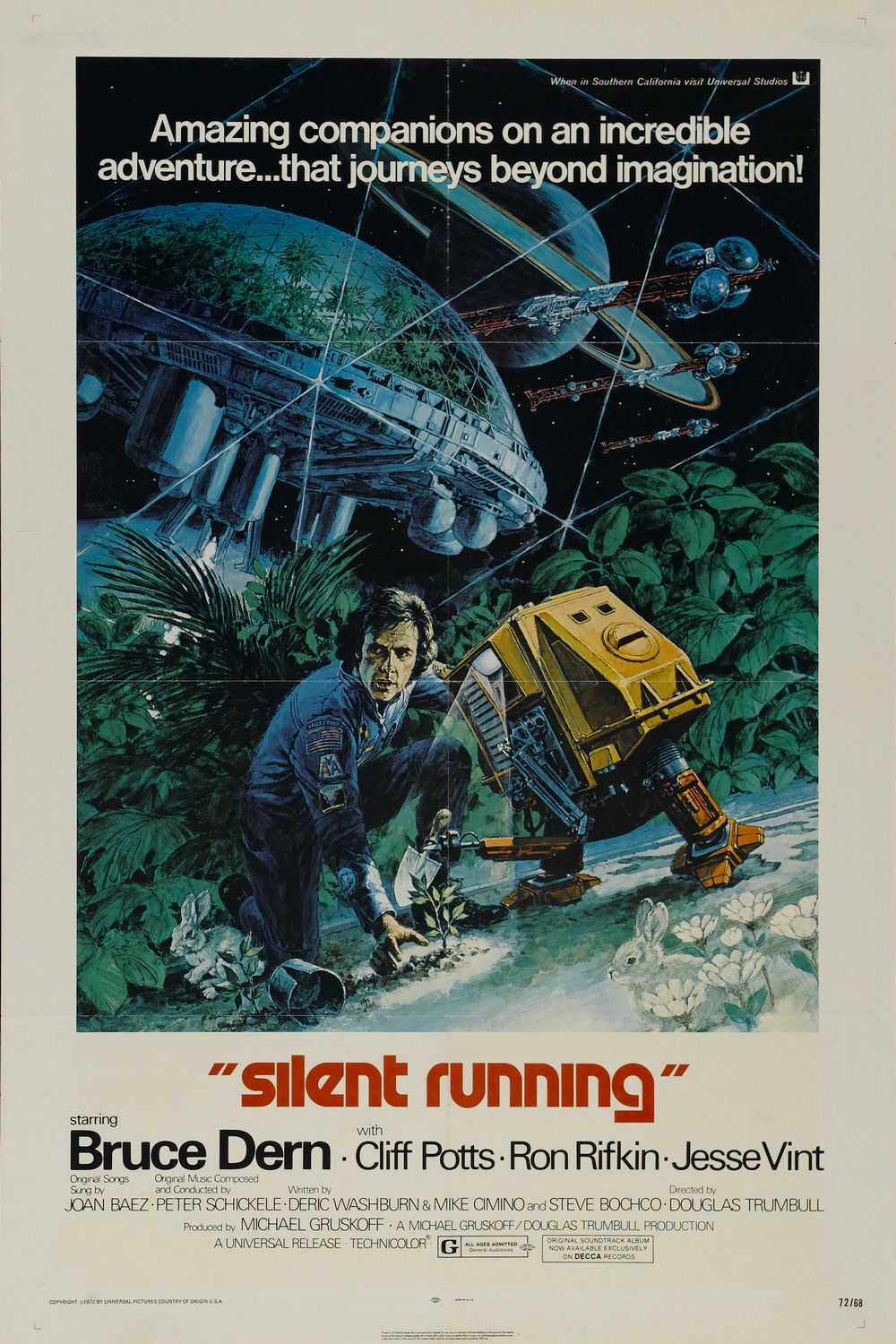
Silent Running (1972) Review


Wednesday, September 4, 2013
Kick-Ass (2010) Review
     
Other films by Matthew Vaughn: Layer Cake, Stardust, X-Men: First Class
Similar films: Kick-Ass 2, Super, Defendor, Watchmen
|
Director: Matthew Vaughn
Stars: Aaron Taylor-Johnson, Chloe Moretz, Nicolas Cage, Christopher Mintz-Plasse, Lyndsy Fonseca
Genre: Superhero, Action, Comedy
Based on the comic book of the same name written by Mark Millar with illustrations by John Romita Jr., Kick-Ass is one of the greatest and most enjoyable superhero movies I have ever watched. A certain question comes to high-schooler Dave Lizewski: "why has no one tried to be a superhero before?" It's a question that nags at him until he decides to do it himself. Donning a mask and costume, Dave becomes Kick-Ass, a lackluster crime fighter and a teenager who has no idea what he's getting himself in to. There's plenty of noticeable differences from the comics, but this was actually a good thing in my opinion, as I found the comic to be incredibly mediocre. The comic set up some great potential, but it utterly failed in living up to that potential and ended up being completely mindless, misguided, and convoluted. The film, however, managed to break free from its source material's pretensions and mediocrity. The violence in the film is over-the-top rather than pseudo-realistic and gritty. The action is incredibly enjoyable, well choreographed, and executed to perfection. The violence definitely translates better on screen than it did on page. After watching, you won't soon forget Hit-Girl massacring an entire hallway of armed thugs in well-utilized slow-motion. It's stylish, operatic action that celebrates its exaggerated violence. And it's awesome. The action is over-the-top in the vein of silver age superhero comics; it embraces its comic book nature and takes advantage of its superhero camp. There's plenty of references to catch in here, whether they be visual, vocal, or stylistic, from Spider-Man to Tim Burton's Batman to Hong-Kong action movies. There's a lot; probably more than a single person can ever catch in a single viewing. Admittedly, like in the comics, a lot of the humor revolves around/relies on the referential nature of the film, which may understandably seem cheap to some, but it's done pretty well and most of the time is actually fairly hilarious. Pardon the pun, but the soundtrack is kick ass. It exploits songs we're all familiar with to great effect, like Joan Jett's "Bad Reputation" or the Banana Splits song as covered by The Dickies. There's some excellent, almost satirical, use of Ennio Morricone. Then there's some songs in here that may surprise you; personally, for me, hearing "This Town Ain't Big Enough for the Both of Us" by Sparks, one of my favorite bands, was a great surprise. Some fantastic tracks that amplify the on-screen action well and make the film all the more enjoyable. There's some top-notch acting to be witnessed in Kick-Ass. Chloe Moretz as Hit-Girl does phenomenal as the foul-mouthed killing machine. Not only does a lot of the film's action involve Hit-Girl, but so does a lot of its humor, and Moretz delivers a great performance on both fronts. The always enjoyable Nicolas Cage is on top of his game here as well, playing Big Daddy, Hit-Girl's off-beat and crazy father. With an Adam West-like performance and a voice that is surely a nod at The Dark Knight, Cage brings plenty of great humor and action to the film as well and is unbelievably enjoyable to watch. Christopher Mintz-Plasse, still known to most as McLovin, does a good job here also as the spoiled and snobby rich kid in a superhero costume. Kick-Ass just may be my favorite superhero movie made so far, which surprised me being that I wasn't a big fan of the comics. What's genius about it is that I think while fans of the comic will be satisfied, it also removes a lot of the things non-fans didn't like, making it potentially enjoyable to non-fans of the comic as well. It's a loving homage to comic books and action movies, and it's both a good comic book movie and a good action movie. Though not perfect, it's still a must see for anyone even mildly interested.  |
Friday, July 19, 2013
Robot Jox (1990) Review
      
Pros:
+Cool, though dated, special effects
+Enjoyable performances
+One of the few live-action mech films
Cons:
-Simple and typical plot
-Convoluted focus
Other films by Stuart Gordon: Re-Animator, From Beyond, Dagon, Dolls
Similar films: Pacific Rim, Gunhed
|
Director: Stuart Gordon
Stars: Gary Graham, Anne-Marie Johnson, Paul Koslo, Michael Alldredge
Genre: Science Fiction, Mecha
This is one of the odder entries in Stuart Gordon's filmography, who is known mostly for directing Lovecraftian horror films like Re-Animator, From Beyond, and Dagon. Robot Jox doesn't have any elder gods, giant tentacle monsters, or decapitation though. Robot Jox is a movie about giant robots, or more accurately mechs, fighting each other. The plot, in essence, involves a futuristic post-apocalyptic world where, instead of having wars, countries settle their disputes by fighting giant mechs, operated by a single pilot inside, in an arena. The film takes place during a "settlement" over which nation should control Alaska, and focuses on "robot jox" Achilles. The plot is straight-forward and nothing really special. There's some predictable espionage going on and a love story that never goes anywhere, but those are all just things happening in-between giant robots fighting. At one point the robots go into outer space, which is the one part that shattered my suspension of disbelief. I guess they just really wanted to show some robots in space (which is pretty much always a good idea in my book) and it was pretty cool to see I guess but there was definitely some potential missed when it comes to giant robots fighting in space. The film seems like it's confused between being a movie for kids or for adults. Some scenes seem like they were written to be very family-friendly, and some as if they wanted to be edgy and mature. This hurts the film severely because it doesn't end up achieving either of them very well. It's not really a movie that very young kids should watch (there's cursing and some light nudity, on top of some violence though most of the violence is comic). At the same time it's a bit cartoony and light-hearted for many adults to enjoy. This demographic conflict is likely due to the creative differences between director Stuart Gordon and co-writer Joe Haldeman (who is a popular sci-fi author who has written classics of the genre like The Forever War). Haldeman wanted a more serious and dramatic science-fiction film with deep characters, whereas Gordon wanted an audience-friendly film with character stereotypes and a plot driven by the special-effects. On the conflict between the two Haldeman said: "I would try to change the science into something reasonable; Stuart would change it back to Saturday morning cartoon stuff. I tried to make believable, reasonable characters, and Stuart would insist on throwing in clichés and caricatures. It was especially annoying because it was a story about soldiers, and I was the only person around who'd ever been one." He makes a fair point. So the plot is simple and missed a lot of potential. Granted. But it's not awful and it does serve its purpose of driving the story to the next special-effects sequence. Plus, there are some other redeemable qualities to the film, among them being the effects. Let me first take a step back and say that this is one of the first live-action mecha films ever made. Which is a pretty big deal to any anime fan. Mecha had really only existed in animation, and the only other live-action film I can think of that came out before Robot Jox and can be called a "Mech film" would be Gunhed, a cyberpunk Japanese film from the year before. Not surprisingly Robot Jox took much inspiration from the Transformers franchise, specifically the toy line, which, at the time, was as popular in the West as Gundam was in the East. But even in the time since Robot Jox we have seen very few live-action mech films. Robt Jox itself spawned a few official and unofficial sequels throughout the 90s (Robot Wars, Robo Warriors, Crash and Burn) and perhaps the most notable example of a live-action mech film was the all too recent Pacific Rim, which is easily the greatest and most proper live-action mech film to date, but the genre of live-action mech films certainly remains small. Now the special effects in Robot Jox aren't quite as impressive as those seen in Pacific Rim (the latter has a time, technological, and budget advantage after all), but they're still pretty awesome. The effects are done with stop-motion animation, and while they're not exactly impressive by 90s standards (keep in mind this film was actually made in the late 80s) they are still very interesting effects and actually look pretty convincing for the most part. And who doesn't love the charm of stop-motion? The two main leads are Gary Graham (Alien Nation, Star Trek) and Anne-Marie Johnson. Both give an alright performance, but in my opinion the real stars here are in the supporting roles. Paul Koslo's performance as the German antagonist is interesting to say the least. It's quite silly in a way, but then so is the rest of the film. It's an enjoyable performance though and it gives a little extra life to the film. Michael Alldredge as Tex also does a charming job. Jeffrey Combs is in here too, a frequent collaborator with Stuart Gordon, but if you blink you'll miss him because he's not in here for long (despite the opening credits saying "starring Jeffrey Combs"). Robot Jox is a nice little cheesy sci-fi flick for fans of the genre and certainly a must see for mecha fans looking for a live-action fix. It has plenty of flaws but at the end of the day remains highly enjoyable. Crash and burn!  |
Monday, July 8, 2013
Gunhed (1989) Review
Pros:
+Good set and costume design
+Good atmosphere
Cons:
-Vague story
-Bad dubbing
Other films by Masato Harada: Kamikaze Taxi, Bounce Ko Gals, Inugami
Similar films: The Terminator, Blade Runner
|
Director: Masato Harada
Stars: Masahiro Takashima, Brenda Bakke
Genre: Science Fiction, Cyberpunk, Mecha
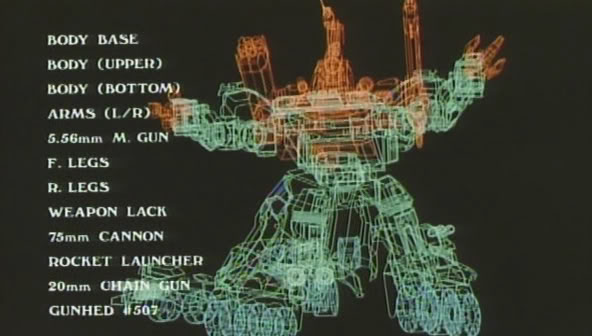
Gunhed (translated from Ganheddo) is a Japanese cyberpunk film produced by Toho, featuring mechs and all the other sort of stuff you'd expect from an 80s cyberpunk movie. The plot of this film is the tricky part. It's hard to follow. Here's how I understood it: a group of bandits (treasure hunters to put it nicely) who infiltrate a complex of some sort on an island to steal or recover something. Many of them are killed by the complex's security systems and one of them is even turned into some weird monster android thing. They find some survivors and the remaining bandit, who is the main character, must fight his way out of the complex to safety by using a giant transforming mech, known as a Gunhed, that he found. It may sound like a simple plot but it's pretty hard to follow. And while I appreciate plots that are daring enough to not hold your hand and let you figure out what's going on for yourself, this one was a bit different. Vague stories can be done very well; but this film is vague without any ambiguity, symbolism, open-endedness, thought-provoking material, etc. It's vague in a very meaningless and disappointing way and is ultimately fairly unsatisfying when it comes to plot. Luckily the film has other things going for it. This film actually has an interesting origin to it. It started out as a script for a new Godzilla film, where Godzilla would fight against a giant supercomputer; it was nearly made but Toho decided to make Godzilla vs. Biollante instead. Toho didn't completely scrap the idea though; the script was re-worked into what became this film: a story about bandits using mechs to fight a supercomputer. It may not be what you'd expect when you hear the word Mech though. Many people would surely think of the mecha genre often associated with anime; shows like Mobile Suit Gundam or Neon Genesis Evangelion. But this is one of the rare live-action mecha films and let's just say it may not be what you'd expect from a Japanese mecha film made by Toho which started out as a Godzilla movie. Don't expect giant robots fighting over the Tokyo skyline. There is some mech combat in here, and it is pretty awesome, but it's in a more, for lack of a better word, realistic way. The mech is about the size of a tank (it can transform to stand up though) and the combat and design are more military-technology orientated than fantastical. Perhaps this films greatest achievement is its visual element. The film obviously didn't have a huge budget but they used what they had very well and very creatively. The set and costume design are especially impressive. The mech design, done by Shoji Kawamori (this is his only credit on a live-action film), is beyond awesome. The entire complex which the film takes place in is unlike anything you've ever seen (well, outside of a cyberpunk film at least). It's a wonderful cyberpunk atmosphere. The effects are really good too, from the transforming mech suit to the combat sequences. The film's style sort of reminds me of Tetsuo: The Iron Man's style, another Japanese cyberpunk film released the same year. I wonder if there was any inspiration taken. Gunhed is almost like an odd combination of Tetsuo: The Iron Man and Hardware and the MechWarrior video games, rooted in anime sensibilities. Sound awesome? Well, yeah, it pretty much is. Unfortunately I could only get my hands on the English dub, not the original Japanese version. I usually try to avoid dubs, and this film is a fine example why. The dubbing isn't anything great, it's actually fairly bad for the most part with the exception of a few good voice actors. It's certainly passable though and it doesn't detract much from the film in any way. The Japanese actors themselves did a decent job; from the beautiful Brenda Bakke to Masahiro Takashima who, to further the Godzilla connection, later starred in Godzilla vs. Mechagodzilla II and Godzilla vs. Destroyah. Though unknown to most, Gunhed has led a fairly respectable legacy. It's one of the first live-action mechas I can think of and probably led to the many live-action mechas that were released in the early 90s, like Robot Jox. A Video Game was based off of it, as was an entire manga series. Footage from it was included in a Front Line Assembly music video. It has been referenced in William Gibson's novel Virtual Light and director James Cameron is a self-proclaimed fan of the film. The original mech prop is even on public display in Japan in this day. So don't go thinking that this is another obscure and forgotten cyberpunk film; it remains remembered and appreciated by many. Gunhed is not a fantastic film but it has some awesome things going for it like cool mech battles and a fantastic visual style with impressive special effects. A must watch for fans of mecha or cyberpunk, or even worth seeing for Godzilla fans who want to see an enemy that the Big G himself nearly faced off against.  |
Wednesday, June 26, 2013
Q: The Winged Serpent (1982) Review

Stars: Michael Moriarty, David Carradine
Genre: Giant Monster, Horror
Q, starring Michael Moriarty and David Carradine, directed by Larry Cohen, is a Giant Monster movie for the 1980s. It takes the classic city-destroying monster and updates it to a time of AIDS, Sony Walkmans, and MTV.
The story is a bit different than your average monster movie. It involves a small time crook, played brilliantly by Moriarty, who accidentally discovers the nest of a giant bird which has been terrorizing the city atop of the Chrysler Building. He then, of course, tries to use his knowledge to get rich, etc. Meanwhile a police officer (Carradine) is discovering the connections between the giant bird monster and the recent sacrificial killings to the Aztec god Quetzalcoatl (from which the film takes its name) that have been going on.
The story is not so much about a giant monster as it is about a petty criminal who is given knowledge of a giant monster's hiding place and must decide what to do with said knowledge. Does he tell the police immediately before the monster has a chance to kill again, or does he wait and use the knowledge for his own gain? It doesn't take him long to decide, but perhaps afterwards he realized the consequences of his actions; as his girlfriend later remarks: "I saw you when you thought you had some power, and it wasn't pretty."
Michael Moriarty's performance is one of the most interesting performances I've ever seen. Whether it's a good or bad performance is certainly debatable, but it's enjoyable nonetheless. In my opinion it's a good performance that sometimes blurs the line between good and bad, but all in all is actually quite masterful. At times it feels as if he's improvising every single line. It's a memorable performance that creates a memorable character, so I'd call it a success. David Carradine (whom many modern audiences may know as Bill from Kill Bill) definitely takes a backseat to Moriarty here, but his performance is charming, even if a little sloppy, nonetheless. Carradine becomes a bit of an action hero in the film's latter half, which was sort of odd.

On to what is, for many, the most important part of a monster movie: the monster. This is where the film runs into some problems. The monster has a cool design and the stop-motion is fantastic to watch, but the monster effects look extremely dated, even for its time (though the gore effects are pretty cool). King Kong from 50 years earlier had better effects; or at least better implemented them. The effects definitely don't blend with the rest of the film. Not only that, but they don't show enough of the monster. For most of the film we only see a glimpse of the monster every ten minutes or so, whether it be a shadow or a claw. It isn't until the very end that we get to see the entire monster; but even then it is extremely underwhelming.

The cult aspect is an interesting twist but the monster isn't memorable for a number of reasons: it has no personality, we don't see much of it, and it doesn't do anything memorable, all it does is kill a few pedestrians. And the ending (some spoilers here) is terribly unsatisfying. The monster was destroyed far too easily, so much so that it was anticlimactic. I mean seriously, what sort of giant monster can be killed by a few gun shots?
If you love the style of the 80s than this film should be enjoyable. The soundtrack is really awesome too.


Purchase Q: The Winged Serpent on Amazon: Blu-Ray - DVD - VHS
Subscribe to:
Posts (Atom)
