      
Purchase from Amazon: DVD
Other films by Edward L. Cahn: Zombies of Mora Tau, Invasion of the Saucer Men, It! The Terror from Beyond Space, Invisible Invaders
Similar films: Night of the Living Dead
|
Director: Edward L. Cahn
Stars: Richard Denning, Angela Stevens, Tristram Coffin
Genre: Science Fiction, Zombie
An American gangster teams up with a German scientist to get revenge on his enemies by controlling corpses reanimated with atomic energy.
The monster movies of the 30s used electricity, the ones of the 50s used atomic energy. Both themes were certainly products of their times. The story of Creature with the Atom Brain was written by legendary sci-fi/horror screenwriter Curt Siodmak. You've almost certainly watched one of his stories; he's written some real classics: The Invisible Man Returns, Invisible Agent, Black Friday, The Ape, The Wolf Man, Frankenstein Meets the Wolf Man, I Walked With a Zombie, Son of Dracula, House of Frankenstein, The Beast With Five Fingers, Bride of the Gorilla, The Magnetic Monster, Riders to the Stars, and the list goes on. He's certainly left a large impact on the world of sci-fi and horror films, and largely carried the genres through the 1940s.
Creature with the Atom Brain is one of Siodmak's lesser-known scripts, and it's definitely not his best work, but it remains enjoyable nonetheless.
The story involves remote controlled reanimated corpses doing the evil bidding of a gangster. This film is a fine example of a pre-Romero non-voodoo zombie movie. Most pre-Romero zombie movies (including Siodmak's own I Walked With a Zombie) had mindless, enslaved zombies that were controlled by voodoo magic and followed the desire of their master, not the desire to eat brains. Creature with the Atom Brain represents a bit of a half-way point between voodoo zombies and flesh-eating zombies. In other words, it's a modernized evolution of the voodoo zombie. The role of the zombies here are very similar to voodoo zombies: they are created by a scientist rather than a necromancer and controlled with science rather than brainwashed with magic, but nonetheless function like a voodoo zombie. They still lack the animality of Romero zombies. That being said, they do strongly resemble Romero zombies and this film helped to move the zombie away from voodoo and more towards science--more towards the type of zombie we're familiar with today.
The film was directed by Edward L. Cahn, who is a bit of a legend in his own right as well. This marks his first science-fiction film, having previously done mostly crime films, most of which have since been forgotten. This shift to science-fiction surely worked out well for him; after this film he went on to direct minor classic like Zombies of Mora Tau (another good pre-Romero zombie film), Invasion of the Saucer Men, It! The Terror from Beyond Space, Invisible Invaders, and plenty of other 50s b-movies. Cahn was a surprisingly competent director. In this film we see some very interesting scenes and camerawork, from the beautifully shot opening to the mostly well shot driving scenes.
Rounding out the trio is Sam Katzman, who produced the film. Katzman produced a lot of films throughout his career, many of them fitting into the b-movie horror category, like The Corpse Vanishes and The Giant Claw.
There wasn't much make-up involved in Creature with the Atom Brain. The "creatures" at the very most may have had some make-up that made them look a bit paler, but most likely not. All they had was a strip across their foreheads representing that their brains were operated on. One effect, though, was actually quite ahead of its time. This film is notable for being one of the very first films to utilize what are known as squibs, a miniature explosive device used to simulate gunshot wounds. We're used to seeing this effect nowadays, being that countless films since have utilized it, but I'm sure it seemed very realistic and impressive (and indeed unnerving) to movie-goers of the time.
Richard Denning, who you may recognize from Creature from the Black Lagoon or Target Earth or Day the World Ended or The Black Scorpion, plays the main character in here. He does a good job. In fact, all the actors in here do a very solid job; somewhat of a rarity for these sort of movies.
Like so many 50s b-movies of the sci-fi or horror persuasion, Creature with the Atom Brain lacks the budget for exciting effects or impressive action or amazing performances or interesting concepts. Because of this there's nothing really noteworthy about it. It's not exactly boring--it's enjoyable enough--but it's not exactly memorable or interesting either.
It'd be wrong to call Creature with the Atom Brain a good movie. It's not. Is it bad? Not quite. There's certainly better films out there, though, even among the 50s b-movie crowd. If you like these types of movies like I do, then you'll have some fun with it though I can guarantee you've seen better. If you're interested in exploring the history of zombie films, then this is a worthwhile footnote to explore. Otherwise, it's not a necessary watch.
 |

Friday, October 11, 2013
Creature with the Atom Brain (1955) Review


Monday, October 7, 2013
World Without End (1956) Review
        
Other films by Edward Bernds: Return of the Fly, Queen of Outer Space
Similar films: The Time Machine, Planet of the Apes
|
Director: Edward Bernds
Stars: Hugh Marlowe, Rod Taylor, Nancy Gates
Genre: Science Fiction, Post-Apocalyptic
A spaceship's crew is returning from a trip to Mars when something goes wrong and they find themselves transported to a post-apocalyptic future where mankind has been forced underground to survive. World Without End undoubtedly took inspiration from H.G. Well's classic novel The Time Machine (coincidentally, Rod Taylor who plays Herbert in this film later went on to star in the 1960 film adaptation of The Time Machine). Obviously it was Wells that pretty much invented the modern concept of the time-travel story, but the similarities go even further. In The Time Machine we see an advanced human race living on the surface of Earth and a savage mutated species living underground. World Without End sort of reverses this, but it's the same idea nonetheless: advanced humans live safely underground while savage beasts roam the surface. Also like in The Time Machine, the advanced humans in World Without End have lost their confidence and will to fight. World Without End perhaps lacks some of the powerful commentary and originality that the H.G. Wells novel had, but as far as time-travel tales go it gets the job done. When we look back on the science-fiction films of the 1950s most of us first think of the campy b-movies with low budgets and cheap effects. It's true that many sci-fi films of the 50s had very low budgets and because of the low budgets had almost always been in black-and-white and lacked a wide-screen format. Don't let the Technicolor in World Without End fool you: it's most certainly a low-budget b-movie. The film's poster proudly states that it's "CinemaScope's first Science-Fiction Thriller," but don't let this fool you either. While most 50s sci-fi was in black-and-white, plenty of larger-budgeted sci-fi movies like Destination Moon, When Worlds Collide, The War of the Worlds, This Island Earth, Forbidden Planet, et al were shot in color. So When Worlds Collide is far from being the first Technicolor sci-fi film. Nor is it the first sci-fi film shot in wide-screen, with that credit going to 20,000 Leagues Under the Sea from 1954. It's also not really a "thriller" like it claims to be. It's exaggerated and misleading poster only fits the film more neatly into the many sci-fi b-movies of its time. (Oh yeah, and that awesome looking crystal-like giant holding that giant clock on the poster? Not in the actual movie.) The reason World Without End was shot in Technicolor and CinemaScope despite having a low-budget and coming out in a time when most b-movies were in black-and-white is because Allied Artists, who produced the film, had a bad "poverty row" reputation that they wanted to shake. To do this they gave a little extra money to this film, allowing it to be shot in color and wide-screen and to exceed the 60-70 minutes runtime that many of the studio's other films had. Too bad there still wasn't enough budget for anything besides the technical aspects. Some of the special effects look very good. The spaceship scenes are visually engaging. The design and costume work of the one-eyed mutated beasts is also impressive; they look both grotesque and unique. Some of the other effects aren't quite as good. The giant mechanical spiders that the main characters encounter in a cave look terribly lifeless and rubbery. The sets and costumes of the underground society, though charming, have that very cheesy retro-futuristic look. They still look pretty good at times anyway. Edward Bernds directed this feature. He directed tons of b-movies throughout the 40s all the way to the 60s. Perhaps his most remembered work, along with a handful of Three Stooges movies, is Return of the Fly starring Vincent Price, which was a sequel to classic monster movie The Fly. If anyone has watched Queen of Outer Space or Valley of the Dragons, both directed by Bernds, then they may recognize the same mechanical spiders that were used in this film. (Again: not a big budget director.) Hugh Marlowe stars in here, who also starred in 1951's The Day the Earth Stood Still and later in Earth vs. the Flying Saucers. His performance isn't exactly good (according to the director Marlowe only got the role because he was willing to work for a very low salary, and he was often lazy and unprepared) but it's passable. The real star here is pre-fame Rod Taylor. This was his first major role and he does a great job. He'd later go on to star in films like The Time Machine, The Birds, and he even made an appearance in Inglorious Basterds. Another possibly recognizable face is that of the beautiful Nancy Gates. She does a good job as the ultra-mini-skirt wearing babe (it's no surprise that all the girls in here are not only beautiful but also dressed in very revealing clothing; Alberto Vargas, one of the most notable pin-up girl artists of all-time, worked on the costume and set sketches for the film). World Without End is an enjoyable film throughout. For a low-budget film it's extremely watchable. It features some interesting themes (even if most of them are ripped straight from Wells) and some cool special effects and set/costume design (even if most of the time it looks cheesy and dated). Its low budget certainly shows but at the same time its use of color and wide screen format help separate it from the countless other b-movies of the 50s. That doesn't necessarily mean it's the best 50s sci-fi has to offer--far from it. But solid nonetheless. Not terribly impressive compared to other works; merely enjoyable.  |
Friday, October 4, 2013
Gravity (2013) Review
        
Pros:
+Stunning visuals/cinematography
+Great use of setting
+Good use of sound and silence +Thrilling +Well crafted +Good acting
Cons:
-Too much use of music/dialogue
-Sentimentality occasionally feels overdone
-Holds the viewer's hand a bit
Other films by Alfonso Cuaron: And Your Mother Too, Children of Men
Similar films: Moon, 2001: A Space Odyssey, Silent Running, The Tree of Life
|
Director: Alfonso Cuarón
Stars: Sandra Bullock, George Clooney
Genre: Science Fiction, Thriller
Veteran astronaut Matt Kowalski and newbie Dr. Ryan Stone are on a space shuttle mission in the orbit of Earth when unexpected debris from an exploded satellite causes them more trouble than they asked for. Trapped in space with oxygen running low, they must find a means of getting back to Earth. The concept is very straight-forward. It's narrative is very linear and to-the-point, but its execution is something else entirely. The entire film takes place in space and features only two characters, but the distant Earth is constantly present in the background and in the characters' minds that it almost feels like an unreachable second setting and space plays so active a role that it almost feels like a third character in and of itself. And man, does this film utilize its setting well. James Cameron called it "the best space film ever done" and I might just agree with him. Ultra wide shots (the film only used wide angle lenses) and multiple long takes help convey the vastness and solitude of space. Even the 3D did well to add an extra sense of depth to the massive abyss. On the other hand, great use of POV shots and extreme close-ups help to put you in the shoes of the main character. You will often feel as dizzy and disoriented as the main character (not that space even has an inherent orient), you'll feel the same helplessness, desperation, and even lack of breath. Space is alive in its nothingness, active in its indifference. "I hate space," Sandra Bullock's character mumbles at one point. Gravity shows us emotional people reacting to an unfeeling void. Space is a constant source of danger and suspense. The tension in this film is crazy. It's edge-of-your-seat stuff. The idea of losing grip and drifting away into space with no control over your movement is such a scary thought, both physically and psychologically, and the film knows this. It at times has as unnerving of an atmosphere as a horror film might. As a thriller it is certainly incredibly thrilling. There's some good use of sound, but more importantly, great contrasting use of silence. The silence of course reinforces the massiveness and desolation of space. There is a musical score, done by Steven Price, and while the score itself is fine, it's certainly no rival to the silence. As the director has said, "There's no sound in space, but there's music in movies." That is of course true, and of course music is used to build tension or help convey the emotions of a scene, but I would have liked to have seen less music and more silence, as I feel that the silence is one of Gravity's best tools, far more valuable and effective than the music. There was also, I felt, too much dialogue. For a film largely about one person floating through space, you'd expect less. Some of it is perfectly warranted, like transmitting "in the blind" to Mission Control in hopes they'll receive the message, and even Sandra Bullock's character talking to herself felt natural most of the time as she was established as a very solitary person, so it's completely believable that she'd occasionally murmur a thing or two to herself. Still though, there could have been less talking and, again, more use of space's inherent silence. A lot of the dialogue felt unnecessary. There's also a lot of sentimentality in here (the scene with Bullock's character and the Chinese guy on the radio was terribly unenjoyable). Again, a lot of it is warranted, especially if you view the film as an allegory for grieving and rebirth, but some of it felt overdone or unnecessary. The film does hold your hand a little bit. Only a little though. Sandra Bullock will talk to herself just to remind the audience that there's satellite debris hurling towards her. Even the beginning of the film felt the need to inform the viewer that there is no sound in space because there is no air for the vibrations to travel through. As if anyone over 12 isn't aware of such a common scientific fact. But we should be thankful that Gravity didn't end up being a typical Hollywood blockbuster, which it very well could have been. The two characters could have easily fallen into numerous romance conventions, scenes taking place on Earth could have easily been implemented, more characters added, etc. Luckily director Alfonso Cuarón is of much more talent than that. Another behind-the-scenes talent is cinematographer Emmanuel Lubezki. He's worked on many of Cuarón's previous works as well as many of Terrence Malick's films (including The Tree of Life which not only has equally beautiful cinematography as Gravity but curiously deals with many of the same themes as well). As if you couldn't already guess, the cinematography here is amazing and Lubezki, along with Cuarón, undoubtedly played a major part in making the film as stunning as it is. The engulfing blackness is humbling, the distant stars beautiful, and the massive Earth jaw-dropping. In front of the camera Sandra Bullock and George Clooney do a fine job as well. Bullock carries the film, being the only character on-screen for the majority of the film. I haven't seen many Bullock films, but it wouldn't surprise me if this is one of the best performances of her career. Clooney has a less frequent role, playing a character we're all familiar with from Clooney: laid-back and suave. While this is definitely Bullock's movie, Clooney adds a welcomed dimension to the film, contrasting Bullock's character with his likable, calm, and humorous personality. The two are, for movie stars, fairly convincing astronauts (the director didn't allow them to wear any make-up, which adds a bit of realism to their appearances). Like the other big Mexican film director Guillermo del Toro, who, with Pacific Rim earlier this year, made the film he would have wanted to watch as a child, a film which relies on stunning visuals that just weren't possible no more than 15 years ago; Alfonso Cuarón, quoted as saying that he made the film that he would have loved to see when he was young, achieved very much the same thing with Gravity. Gravity is a technical masterpiece, a milestone in special effects, and just completely awe-inspiring and stunning. Much like Pacific Rim. And Gravity does, at times, feel like a mindless special effects roller coaster thrill ride, being little more than a demonstration of technical ability. But there is more to Gravity than that. In movies every shot serves a purpose, every scene a motive, and every word a meaning. If you care enough to watch closely it's nearly impossible to miss the clear depth, symbolism, and metaphor that the director crafted. [Spoilers in this paragraph:] Dr. Ryan Stone is mourning her daughter; she takes escape to its utmost extreme: she literally leaves Earth. In this orbit she experiences a rebirth. She often accepts death, whether it be from the debris flying towards her or the seemingly impossible task of getting back down to Earth; she has nothing to live for. But gravity pulls and Dr. Stone must fall before she can get back up (get it? Stone? Ha!). There was always a reason for her to live, for her to try and survive, and it was always there tugging at her, she just had to realize it. She had to allow gravity to do its job. Allow herself to be pulled back down to Earth, back down to reality, back down to solid ground. This is her rebirth, her umbilical cord-like tether has been cut and she must find herself alone. And when she gets back to Earth and finally reaches land for the first time in the entire film, something she can finally plant her feet on, she nearly falls back down while trying to get up (remember, she just spent the whole film floating in zero gravity and swimming. Walking is a foreign concept to her body.) "No, not this time," she says, her face nearly hitting the sand, and rises to her feet. She's done falling. Gravity doesn't need to pull her back down anymore, she's already grounded, all she has to do is stand up. There's even more subtle, less meaningful things you may have missed in the film. For example, in the Russian space station there's chess pieces flying around and in the Chinese space station there's a ping pong paddle floating around. There's some other light-hearted moments like this throughout the film, and some not so light-hearted, but I'll leave them for you to find on your own. In conclusion, Gravity is an amazing visual spectacle but it proves that that's not all it is. It is genius in its minimalism and thrilling in its execution. It is one of the greatest films of the year, and will likely prove to be one of the greatest of all-time. Arguably Cuarón's best work to date and a worthwhile experience for any lover of cinema.  |
Monday, September 30, 2013
You're Next (2011) Review
        
Other films by Masato Harada: Pop Skull, A Horrible Way to Die
|
Director: Adam Wingard
Stars: Sharni Vinson, AJ Bowen, Barbara Crampton, Amy Seimetz, Wendy Glenn, Ti West
Genre: Horror, Black Comedy
I went into You're Next fully hoping to like it. It's gotten nothing but praise since it first screened at a festival in 2011, and the trailers seemed interesting enough. It's been said to play with genre conventions and is funny, scary, and unique. Unfortunately, I didn't find those things to be exactly true. Three brothers and their girlfriends/wives along with their sister and her boyfriend go to visit their parents in their vacation home for a family reunion. However, during the family dinner, much to their surprise, they are attacked by mysterious crossbow-wielding men in masks, who leave them trapped in their own home and seem intent on picking them off one by one. I've always believed that while a film that avoids convention is almost always a good thing, a film that uses such conventions to its advantage and shows them to the viewer in a new way takes a very special talent. To my dismay, I didn't quite find that in You're Next. It doesn't play with tropes, it's just filled with them. From the "final girl" trope to the predictable twists. The first half of the film has a fair amount of enjoyable suspense and mystery. You're constantly wondering why these people are being attacked and who it is that's attacking them. Are these masked men really even men? The answers to these questions are hardly satisfactory. In the second half, the unknown and mysterious protagonists become familiar and understandable. Their motives are made clear and thus the mystery and much of the suspense is lost; we see their weakness and thus much of the terror is lost. After the first twist the film goes from being suspenseful and scary to merely thrilling and gruesome. The first half builds up their power and ability, whereas the second half shows their vulnerability and stupidity.
I understand that a mystery can't necessarily stay mysterious forever. I understand that motives will eventually be made known. I understand that suspense must be building up to something else. But the mystery reveals itself to be predictable, the motives to be idiotic, and the suspense to be building towards little more than straight up gory violence. The film worked much better in the first half with suspense and mystery, but it seemed to not know where to go from there and failed to capitalize on a solid opening.
The film is extremely repetitive because of this. One of the most repetitive movies I've ever seen. The entire film consists of people trying to kill people inside of a house. It never really becomes anything more than that and it gets pretty old fast. The opening is exciting, as are the first few kills, but after that it's purely cyclical. Kill after kill, escape after escape, trap after trap. This wouldn't be so bad if the kills were unexpected or creative, but they're not (okay, the one kill involving a certain kitchen appliance was sort of cool). The film becomes stale long before its 95 minutes are up.
Unlike many slashers that consist of mostly teenage characters, You're Next has the interesting setup of having the characters be a family. This obviously opens up a fantastic avenue for not only natural feeling character development but for compelling character relationships, drama, and unique humor as well. You're Next does realize this potential to a certain extent, not so much when it comes to character development but certainly when it comes to relationships and humor. It does at times almost feel like a dysfunctional family sitcom placed in the middle of a horror movie. Some of the funniest moments come from Joe Swanberg as Drake and his relationship with his brother Felix.
Though I was still expecting there to be a bit more comedy in here. Obviously the humor that is in here is very dark, but there's really not too much of it. Nothing that funny anyway. Sure, the whole film kind of has a metafiction/self-conscious feel to it, but that doesn't make it inherently funny or clever, especially being that it does little with its meta-ness. It's not very much of a satire or parody, nor is it a reworking or deconstruction of the genre. It's really just a fairly typical slasher / home-invasion thriller with a few mildly enjoyable moments.
For the most part the acting was acceptable, save for a few scenes (notably the horrendously acted first scene with the mother and father). Sharni Vinson as Erin the Super Australian (in fact, I think Super Australian would have been a more suiting title for the film. Probably would have sold more tickets, too. What kind of name is You're Next anyway?) does a good job kicking a lot of ass (because, of course, she conventionally was raised in a survivalist camp) and playing a fairly likable and empowered character (scream queen she is not). You never really get to know or care for the characters that much. For the most part the characters are performed as dully as they are written. Which is a disappointment being that the family aspect had potential. Oh yeah, and Ti West is in here for a few minutes. And scream queen Barbara Crampton as well.
My favorite part of the entire film is probably the soundtrack. The whole film was definitely going for an 80s slasher vibe and it's most evident in the repetitious synth score that dominates the latter half of the film. Along with the great electronic music there's the also repetitious use of Dwight Twilley's "Looking for the Magic," which is used to great effect. The end credits song was also a joy.
I don't regret the time and money I spent on You're Next, I enjoyed myself while watching it, but it certainly didn't impress me and due to the rave reviews it was a bit of a let down. As a fan of the horror genre I didn't find it to be anything but typical.
 |
Friday, September 27, 2013
Film Adaptations of 1984 by George Orwell
[A series in which I go through the film adaptations of novels, authors, comics, television shows, video games, etc.]
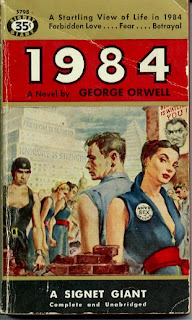 Nineteen Eighty-Four [1984] is a dystopian novel written by George Orwell in 1948. It's a brilliant book that tells the story of a totalitarian society, a tyrannical Big Brother, and a man who rebels and finds love. Orwell had previously written the also political warning that is Animal Farm, which, like 1984, shows that out-of-check politics can be a very scary thing. Orwell himself was a devoted socialist, so devoted in fact that he made it his goal with all his writings to warn people of false-socialism and how it can be abused by leaders. I think it is without doubt that he achieved that goal. Terms like "Big Brother" and "doublethink" have worked their way into everyday vocabulary, and we owe 1984 for that. Even the author's name is constantly used to describe similar works, with nearly every dystopian work that followed 1984 being called "Orwellian" by at least someone.
 During the first half of the 20th century there were many popular dystopian (or perhaps better called Negative Utopian) novels written, many even before 1984, like Zamyatin's We or Huxley's Brave New World. It's not hard to see why; two World Wars and the beginning of a paranoid-filled Cold War all in less than half a century tend to cause people to reevaluate their governments and societies. Orwell wasn't quite original in his concept of a dystopian future, but he undoubtedly was in his delivery and details.
Before watching any movies based on 1984, I would highly recommend reading the original novel, as it is unmatched by any imitators or adaptations.
Along with its massive influence on the genre of dystopian fiction, 1984 spawned many adaptations in all fields of media and art. Countless musicians and bands such as The Clash or Radiohead or The Kooks or Bad Religion have turned the novel into song. It's been adapted to radio plays and stage plays and even operas. Even other authors have paid tribute to 1984 with Anthony Burgess's 1985 or Haruki Murakami's 1Q84.
But today I point my focus towards the film adaptations. I will go through them chronologically and compare each one to the novel and, in the end, conclude which one is not only the best of the lot, but also the most faithful. Spoilers will follow.
1984 (1953)
The first ever screen adaptation aired on September 21, 1953 on the CBS anthology series Studio One in Hollywood. It starred Eddie Albert as Winston, Norma Crane as Julia, and Lorne Greene as O'Brien. Directed by Paul Nickell.
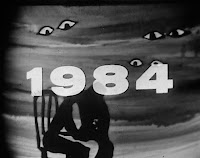 The first thing any 1984 fan will notice while watching this is how many classic lines and quotes from the novel it misses, including the famous “If you want a picture of the future, imagine a boot stamping on a human face—forever," or the famous proclaiming of love towards Big Brother at the end. Then again, this was made less than five years after the book was published so maybe they didn't adore those quotes as we do today, perhaps it took time to reach the iconic status.
The plot gets all the basics down, though the total run-time is less than an hour so some necessary simplification was required. The one disappointing scene (unsurprisingly) was the torture/interrogation scene with Winston and O'Brien. It's incredibly hard to live up to how excellent that part was in the novel but this portrayal of it was much of a let down. Also, Emmanuel Goldstein's name was, for one reason or another, changed to Cassandra.
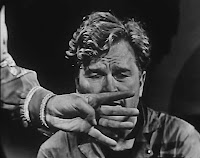 The characters are pretty accurate to the novel's, but they just didn't feel real. Maybe it was a lack of passion on the acting part or an over-simplification in the writing, but they just didn't feel likable or even believable.
The rendition of "Under the spreading chestnut tree, I sold you and you sold me" sounds very good here. It's a chilling and haunting delivery.
Overall it's not a terrible adaptation and it never strays too far from the novel, but at the same time it misses many of the novel's best traits and in the end fails to capture its essence. There are, as we will get to, better alternatives to this first screen adaptation.
Nineteen Eighty-Four (1954)
Only a year after the first screen adaptation another one was broadcast in the UK by BBC. Created by director-writer duo of The Quatermass Experiment fame Rudolph Cartier and Nigel Kneale and starring pre-Hammer Films Peter Cushing.
 This live teleplay, which runs for nearly two hours, captures the novel's plot excellently. Just about all of it is there, including, unlike the last adaptation, all the best quotes. I was actually fairly surprised how truthful it stayed to the novel. It does have the advantage of being double the running time of the American television adaptation, but everything is very well executed. As one must expect from a film adapting a much longer novel, not everything is as thawed out or as well paced as the novel, but the effort is impressive.
I did feel like it might be a bit confusing for people watching it that have never read the book. It's visuals didn't relay all the information as well as the novel's words did. Someone who didn't read the novel may feel a bit lost at times. It's hard, however, for me to say whether this is absolutely true or not, being that I am indeed familiar with the novel, but it's just the way I felt while watching.
One of my favorite scenes was the scene where Winston and Julia were arrested. I found that scene in particular to be very well executed, with the telescreen on the wall being vocalized so well. The torture/interrogation scene, though an improvement over the last film's, could have been better, I think. It wasn't bad but it again lacked the intensity and length it had in the novel. Some scenes were done fantastically, some were bit lackluster, some were just decent.
 The characters here are also very spot on. The marvelous Peter Cushing portrays Winston excellently, there is no doubt there, but it is not only the acting that make the characters very accurate, but the writing too. The writing really did capture Winston, Julia, and even Syme very well. O'Brien was well written and solidly performed, but for some reason I felt he could have been better.
When it aired it flared much controversy with people complaining of the film's "subversive content and horrific nature," which, I think, is a good indication that the film captures the essence of the novel. 1984 is indeed a frightening story.
Overall this is a very good adaptation, and though not perfect it is an impressive effort and a largely under-appreciated work.
1984 (1956)
Here is the first theatrical adaptation and, at the time, the largest budgeted and highest produced adaptation. And it certainly shows.
 Like the 1954 version, this is a UK production, though it feels more like the 1953 American version. This makes sense being that the same writer from the 1953 American version, William Templeton, also co-wrote this one. However, not only does this film have connections with the 1953 one, but it also does with the 1954 in that Donald Pleasence, who played Syme in the 1954 version, returns here as Parsons.
The film is nowhere near as faithful as the 1954 one was, unfortunately. It's an improvement over the first one in 1953 both in terms of faithfulness and quality, but the Peter Cushing 1954 one still has it beat when it comes to faithfulness. The story here seems to focus more on the love between Winston and Julia and turns it almost completely into a love story. That's terribly unfortunate; as any 1984 fan knows it is far more than a love story. However, despite its inaccuracy, the love story, I thought, was very well done.
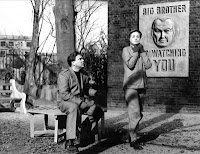 The torture scene was the best hitherto, though it still had room for improvement. The film has absolutely beautiful cinematography and what the camera angles did so well during the torture scene was to put you in the same position as Winston. During the torture scene much of it plays out through Winston's perspective, like a POV shot, so it makes you feel like you're Winston. What made the torture part in the book so effective was that it put you in Winston's shoes; this film adaptation attempted to achieve the same thing and, all in all, succeeded.
As expected, the film changed a few minor things from the novel. Again, as with Templeton's last 1984 screenplay, Emmanuel Goldstein's name is changed, this time to Cellador. O'Brien is also changed to O'Connor, my guess being in order to avoid confusion between actor Eddie O'Brien who played Winston. The film missed a few great quotes from the novel, but it manages to get some of them. The ending was solid.
 All the characters were portrayed very well, especially Julia and O'Connor. Winston, however, was not very good at all. Eddie O'Brien is a fine actor, but he's just no Winston. He doesn't look like Winston, talk like Winston, act like Winston. It was a terrible casting decision, especially since the last two adaptations had pretty good Winstons.
This adaptation is not as faithful as the 1954 one, but as a film I feel it is better. Its larger budget and high production values really make clear the difference between film and teleplay. It's a worthy adaptation, though far from perfect.
1984 Commercial (1984)
This isn't exactly a film, it's actually a 1 minute advertisement for the Apple Macintosh that aired during Superbowl XVIII. It was directed by Ridley Scott, of Alien and Blade Runner fame.
 Obviously there's not much of a plot here, and in terms of faithfulness to the novel, it has little. It has a nameless heroin whom is not from the novel and the only character recognizable is Big Brother, played wonderfully by David Graham.
The commercial intended to associate Apple with non-conformity and IBM with the power-hungry Big Brother (a bit ironic by today's standards). It's often hailed as one of the greatest commercials of all time and it certainly is very well-made. Ridley Scott directed this on a budget of $900,000. Yes, nearly one million dollars just to make the one-minute commercial, and that's not even accounting for the money they paid for the Superbowl spot.
It has cinematic nods to Metropolis (another great dystopian work) and it's a very beautiful looking world (as expected from the man behind Blade Runner). I just felt I should mention this, though it's not really an adaptation. Hell, it's only one minute long, go watch it on YouTube.
Nineteen Eighty-Four (1984)
This is the film that most people will think of first when thinking of Orwell films. A British production, directed by Michael Radford and, very appropriately, released in the year 1984.
 The plot here follows the novel's story very closely. Of course there were the obligatory omissions, as a 2 hour film can rarely adapt everything from a 300-plus page book. But what it does do it does well, and stays faithful to the source text. It does a fantastic job of maintaining Orwell's vision, world, and message.
The film visualizes a very melancholy and depressing world, devoid of color and emotion. Like the novel, it's a world that is dystopic yet believable. The film's sets and color schemes definitely match the tone of the novel. It's quite the downer of the film, not unlike the novel, but that is the job of a warning, after all. In contrast to the industrial visuals, Winston imagines a world of green grass and love, with a landscape less resembling a Hugh Feriss sketch and more like an Andrew Wyeth painting.
 The characters are written and portrayed great. They're mostly carbon copies of their prose counterparts, and the performances here are very impressive. John Hurt as Winston is perfect, capturing the weariness and helplessness of the character. Richard Burton is great as the intimidating though somewhat sympathetic O'Brien. Suzanna Hamilton as Julia is good here also.
The 1954 teleplay still stays a bit more faithful, but the larger production values and wonderful performances make this one a very worthwhile adaptation. It also conveys the atmosphere of the novel, I feel, better than any other adaptation.
Brazil (1985)
Directed by former Monty Python member Terry Gilliam, Brazil, which was developed under the working titles The Ministry and 1984 ½ (a nod not only to the novel but to Fellini's 8½ as well), is perhaps the loosest Orwell adaptation there is. Terry Gilliam has even admitted that he wrote the script before ever even reading the novel.
 Expectedly, the film's story isn't very faithful to the novel; aside from some similarities and parallels, it's very much a work of its own. What Brazil does share with 1984 though is the totalitarian themes and dystopian world. It achieves almost all of the same messages and warnings that 1984 did, and in that respect is a faithful adaptation.
It's also interesting to see an adaptation done by someone who has never read the source material. It brings a certain freshness and unique perspective to the Orwellian dystopia. It also goes to show just how much Orwell's novel has seeped into the public consciousness and culture, making itself familiar to people who haven't even read it.
 The visual style evokes not only a dystopian aesthetic but a a blend of German expressionism, film noir, retro futurism, and surrealism as well. Mixed with comedy and fantasy, this may not be the 1984 adaptation one would expect, but it's undoubtedly a masterful work that, at its core, I'm sure would do Orwell proud.
This also, out of all the adaptations, has possibly the best rendition of the torture scene.
A loose adaptation that touches on many of the same things Orwell did. If anything an enjoyable film for its visuals and set design.
Conclusion
Though very rarely does an adaptation outdo its source, there have been some interesting adaptations of Orwell's novel. None of them are perfect, and none are, I'd argue, as good as the novel, but every one is worth watching at least once.
Best Winston portrayal: John Hurt in Nineteen Eighty-Four (1984)
Most faithful adaptation: Nineteen Eighty-Four (1954)
Least faithful adaptation: Brazil (1985)
Best film: 1984 (1956)
Worst film: 1984 (1953)
 Nineteen Eighty-Four [1984] is a dystopian novel written by George Orwell in 1948. It's a brilliant book that tells the story of a totalitarian society, a tyrannical Big Brother, and a man who rebels and finds love. Orwell had previously written the also political warning that is Animal Farm, which, like 1984, shows that out-of-check politics can be a very scary thing. Orwell himself was a devoted socialist, so devoted in fact that he made it his goal with all his writings to warn people of false-socialism and how it can be abused by leaders. I think it is without doubt that he achieved that goal. Terms like "Big Brother" and "doublethink" have worked their way into everyday vocabulary, and we owe 1984 for that. Even the author's name is constantly used to describe similar works, with nearly every dystopian work that followed 1984 being called "Orwellian" by at least someone.
 During the first half of the 20th century there were many popular dystopian (or perhaps better called Negative Utopian) novels written, many even before 1984, like Zamyatin's We or Huxley's Brave New World. It's not hard to see why; two World Wars and the beginning of a paranoid-filled Cold War all in less than half a century tend to cause people to reevaluate their governments and societies. Orwell wasn't quite original in his concept of a dystopian future, but he undoubtedly was in his delivery and details.
Before watching any movies based on 1984, I would highly recommend reading the original novel, as it is unmatched by any imitators or adaptations.
Along with its massive influence on the genre of dystopian fiction, 1984 spawned many adaptations in all fields of media and art. Countless musicians and bands such as The Clash or Radiohead or The Kooks or Bad Religion have turned the novel into song. It's been adapted to radio plays and stage plays and even operas. Even other authors have paid tribute to 1984 with Anthony Burgess's 1985 or Haruki Murakami's 1Q84.
But today I point my focus towards the film adaptations. I will go through them chronologically and compare each one to the novel and, in the end, conclude which one is not only the best of the lot, but also the most faithful. Spoilers will follow.
1984 (1953)
The first ever screen adaptation aired on September 21, 1953 on the CBS anthology series Studio One in Hollywood. It starred Eddie Albert as Winston, Norma Crane as Julia, and Lorne Greene as O'Brien. Directed by Paul Nickell.
 The first thing any 1984 fan will notice while watching this is how many classic lines and quotes from the novel it misses, including the famous “If you want a picture of the future, imagine a boot stamping on a human face—forever," or the famous proclaiming of love towards Big Brother at the end. Then again, this was made less than five years after the book was published so maybe they didn't adore those quotes as we do today, perhaps it took time to reach the iconic status.
The plot gets all the basics down, though the total run-time is less than an hour so some necessary simplification was required. The one disappointing scene (unsurprisingly) was the torture/interrogation scene with Winston and O'Brien. It's incredibly hard to live up to how excellent that part was in the novel but this portrayal of it was much of a let down. Also, Emmanuel Goldstein's name was, for one reason or another, changed to Cassandra.
 The characters are pretty accurate to the novel's, but they just didn't feel real. Maybe it was a lack of passion on the acting part or an over-simplification in the writing, but they just didn't feel likable or even believable.
The rendition of "Under the spreading chestnut tree, I sold you and you sold me" sounds very good here. It's a chilling and haunting delivery.
Overall it's not a terrible adaptation and it never strays too far from the novel, but at the same time it misses many of the novel's best traits and in the end fails to capture its essence. There are, as we will get to, better alternatives to this first screen adaptation.
Nineteen Eighty-Four (1954)
Only a year after the first screen adaptation another one was broadcast in the UK by BBC. Created by director-writer duo of The Quatermass Experiment fame Rudolph Cartier and Nigel Kneale and starring pre-Hammer Films Peter Cushing.
 This live teleplay, which runs for nearly two hours, captures the novel's plot excellently. Just about all of it is there, including, unlike the last adaptation, all the best quotes. I was actually fairly surprised how truthful it stayed to the novel. It does have the advantage of being double the running time of the American television adaptation, but everything is very well executed. As one must expect from a film adapting a much longer novel, not everything is as thawed out or as well paced as the novel, but the effort is impressive.
I did feel like it might be a bit confusing for people watching it that have never read the book. It's visuals didn't relay all the information as well as the novel's words did. Someone who didn't read the novel may feel a bit lost at times. It's hard, however, for me to say whether this is absolutely true or not, being that I am indeed familiar with the novel, but it's just the way I felt while watching.
One of my favorite scenes was the scene where Winston and Julia were arrested. I found that scene in particular to be very well executed, with the telescreen on the wall being vocalized so well. The torture/interrogation scene, though an improvement over the last film's, could have been better, I think. It wasn't bad but it again lacked the intensity and length it had in the novel. Some scenes were done fantastically, some were bit lackluster, some were just decent.
 The characters here are also very spot on. The marvelous Peter Cushing portrays Winston excellently, there is no doubt there, but it is not only the acting that make the characters very accurate, but the writing too. The writing really did capture Winston, Julia, and even Syme very well. O'Brien was well written and solidly performed, but for some reason I felt he could have been better.
When it aired it flared much controversy with people complaining of the film's "subversive content and horrific nature," which, I think, is a good indication that the film captures the essence of the novel. 1984 is indeed a frightening story.
Overall this is a very good adaptation, and though not perfect it is an impressive effort and a largely under-appreciated work.
1984 (1956)
Here is the first theatrical adaptation and, at the time, the largest budgeted and highest produced adaptation. And it certainly shows.
 Like the 1954 version, this is a UK production, though it feels more like the 1953 American version. This makes sense being that the same writer from the 1953 American version, William Templeton, also co-wrote this one. However, not only does this film have connections with the 1953 one, but it also does with the 1954 in that Donald Pleasence, who played Syme in the 1954 version, returns here as Parsons.
The film is nowhere near as faithful as the 1954 one was, unfortunately. It's an improvement over the first one in 1953 both in terms of faithfulness and quality, but the Peter Cushing 1954 one still has it beat when it comes to faithfulness. The story here seems to focus more on the love between Winston and Julia and turns it almost completely into a love story. That's terribly unfortunate; as any 1984 fan knows it is far more than a love story. However, despite its inaccuracy, the love story, I thought, was very well done.
 The torture scene was the best hitherto, though it still had room for improvement. The film has absolutely beautiful cinematography and what the camera angles did so well during the torture scene was to put you in the same position as Winston. During the torture scene much of it plays out through Winston's perspective, like a POV shot, so it makes you feel like you're Winston. What made the torture part in the book so effective was that it put you in Winston's shoes; this film adaptation attempted to achieve the same thing and, all in all, succeeded.
As expected, the film changed a few minor things from the novel. Again, as with Templeton's last 1984 screenplay, Emmanuel Goldstein's name is changed, this time to Cellador. O'Brien is also changed to O'Connor, my guess being in order to avoid confusion between actor Eddie O'Brien who played Winston. The film missed a few great quotes from the novel, but it manages to get some of them. The ending was solid.
 All the characters were portrayed very well, especially Julia and O'Connor. Winston, however, was not very good at all. Eddie O'Brien is a fine actor, but he's just no Winston. He doesn't look like Winston, talk like Winston, act like Winston. It was a terrible casting decision, especially since the last two adaptations had pretty good Winstons.
This adaptation is not as faithful as the 1954 one, but as a film I feel it is better. Its larger budget and high production values really make clear the difference between film and teleplay. It's a worthy adaptation, though far from perfect.
1984 Commercial (1984)
This isn't exactly a film, it's actually a 1 minute advertisement for the Apple Macintosh that aired during Superbowl XVIII. It was directed by Ridley Scott, of Alien and Blade Runner fame.
 Obviously there's not much of a plot here, and in terms of faithfulness to the novel, it has little. It has a nameless heroin whom is not from the novel and the only character recognizable is Big Brother, played wonderfully by David Graham.
The commercial intended to associate Apple with non-conformity and IBM with the power-hungry Big Brother (a bit ironic by today's standards). It's often hailed as one of the greatest commercials of all time and it certainly is very well-made. Ridley Scott directed this on a budget of $900,000. Yes, nearly one million dollars just to make the one-minute commercial, and that's not even accounting for the money they paid for the Superbowl spot.
It has cinematic nods to Metropolis (another great dystopian work) and it's a very beautiful looking world (as expected from the man behind Blade Runner). I just felt I should mention this, though it's not really an adaptation. Hell, it's only one minute long, go watch it on YouTube.
Nineteen Eighty-Four (1984)
This is the film that most people will think of first when thinking of Orwell films. A British production, directed by Michael Radford and, very appropriately, released in the year 1984.
 The plot here follows the novel's story very closely. Of course there were the obligatory omissions, as a 2 hour film can rarely adapt everything from a 300-plus page book. But what it does do it does well, and stays faithful to the source text. It does a fantastic job of maintaining Orwell's vision, world, and message.
The film visualizes a very melancholy and depressing world, devoid of color and emotion. Like the novel, it's a world that is dystopic yet believable. The film's sets and color schemes definitely match the tone of the novel. It's quite the downer of the film, not unlike the novel, but that is the job of a warning, after all. In contrast to the industrial visuals, Winston imagines a world of green grass and love, with a landscape less resembling a Hugh Feriss sketch and more like an Andrew Wyeth painting.
 The characters are written and portrayed great. They're mostly carbon copies of their prose counterparts, and the performances here are very impressive. John Hurt as Winston is perfect, capturing the weariness and helplessness of the character. Richard Burton is great as the intimidating though somewhat sympathetic O'Brien. Suzanna Hamilton as Julia is good here also.
The 1954 teleplay still stays a bit more faithful, but the larger production values and wonderful performances make this one a very worthwhile adaptation. It also conveys the atmosphere of the novel, I feel, better than any other adaptation.
Brazil (1985)
Directed by former Monty Python member Terry Gilliam, Brazil, which was developed under the working titles The Ministry and 1984 ½ (a nod not only to the novel but to Fellini's 8½ as well), is perhaps the loosest Orwell adaptation there is. Terry Gilliam has even admitted that he wrote the script before ever even reading the novel.
 Expectedly, the film's story isn't very faithful to the novel; aside from some similarities and parallels, it's very much a work of its own. What Brazil does share with 1984 though is the totalitarian themes and dystopian world. It achieves almost all of the same messages and warnings that 1984 did, and in that respect is a faithful adaptation.
It's also interesting to see an adaptation done by someone who has never read the source material. It brings a certain freshness and unique perspective to the Orwellian dystopia. It also goes to show just how much Orwell's novel has seeped into the public consciousness and culture, making itself familiar to people who haven't even read it.
 The visual style evokes not only a dystopian aesthetic but a a blend of German expressionism, film noir, retro futurism, and surrealism as well. Mixed with comedy and fantasy, this may not be the 1984 adaptation one would expect, but it's undoubtedly a masterful work that, at its core, I'm sure would do Orwell proud.
This also, out of all the adaptations, has possibly the best rendition of the torture scene.
A loose adaptation that touches on many of the same things Orwell did. If anything an enjoyable film for its visuals and set design.
Conclusion
Though very rarely does an adaptation outdo its source, there have been some interesting adaptations of Orwell's novel. None of them are perfect, and none are, I'd argue, as good as the novel, but every one is worth watching at least once.
Best Winston portrayal: John Hurt in Nineteen Eighty-Four (1984)
Most faithful adaptation: Nineteen Eighty-Four (1954)
Least faithful adaptation: Brazil (1985)
Best film: 1984 (1956)
Worst film: 1984 (1953)
Subscribe to:
Posts (Atom)
