Wednesday, April 3, 2013

Fist of Fury (1972) Review

Bruce Lee's Fist of Fury poster
Director: Lo Wei
Stars: Bruce Lee, Nora Miao
Genre: Kung Fu

There's a lot of confusion between the actual names of this film and Bruce Lee's previous film The Big Boss. Fist of Fury is also commonly referred to as The Chinese Connection or The Iron Hand. For information about the name confusion refer here and here. I often call it The Chinese Connection because that's the name I grew up using (and the name that all of America grew up using until about 2005) but it seems to be that more and more people are beginning to accept it as Fist of Fury so I intend to do the same.

The plot concerns Bruce Lee and some bad guys. I'm sure you can figure out the rest.

The plot of this film is perhaps a bit better than The Big Boss, or at least more original. But it's also a bit slower paced. There's really not much action for the majority of the film. The first 60 minutes or so are actually really boring. It isn't until the last 30 minutes that things start to get really good with lots of cool fights and stuff. Granted there is a pretty cool fight scene towards the beginning but for long periods it's actually very disappointing.

There's a lot of drama in this one, particularly between the martial arts schools, and there's even a bit more romance thrown in than usual.

The fighting though is great, both in choreography and in performance. Bruce Lee definitely feels more like a superstar in this one. I don't want to spoil anything but there's some pretty awesome kills in this one and every fight scene does something a bit different than the last. 

Hiroshi Suzuki and Petrov aren't really as intimidating opponents as the main villain in The Big Boss was, but they're still pretty solid (Petrov especially). Aside from that though you'll see a lot of the same faces from The Big Boss.

Bruce Lee's Fist of Fury

This film was perhaps even more influential than  Lee's previous, propelling him higher into fame and replacing Japan's Chambara films with Kung Fu. In some regards I feel that this is worse than The Big Boss but at the same time I feel it's better in a lot of ways. All in all I regard them of about equal quality.

Bruce Lee vs Katana in Fist of Fury

One thing I'd like to comment on is the character of Chen Zhen (played here by Bruce Lee) and the sequels to this film. The four kings of Kung Fu are generally regarded to be Bruce Lee, Jackie Chan, Jet Li, and Donnie Yen. Four kings. There also happen to be four Fist of Fury films. Each one of them star a different king of kung fu. Bruce Lee in Fist of Fury (1972), Jackie Chan in New Fist of Fury (1976), Jet Li in Fist of Legend (1994), and Donnie Yen in Legend of the Fist (2010); each one of them playing the character of Chen Zhen. There's really no point I'm trying to make here but isn't it interesting that all four of the great have played the same character? (Technically Jackie Chan played the successor to Chen Zhen but you get the point).
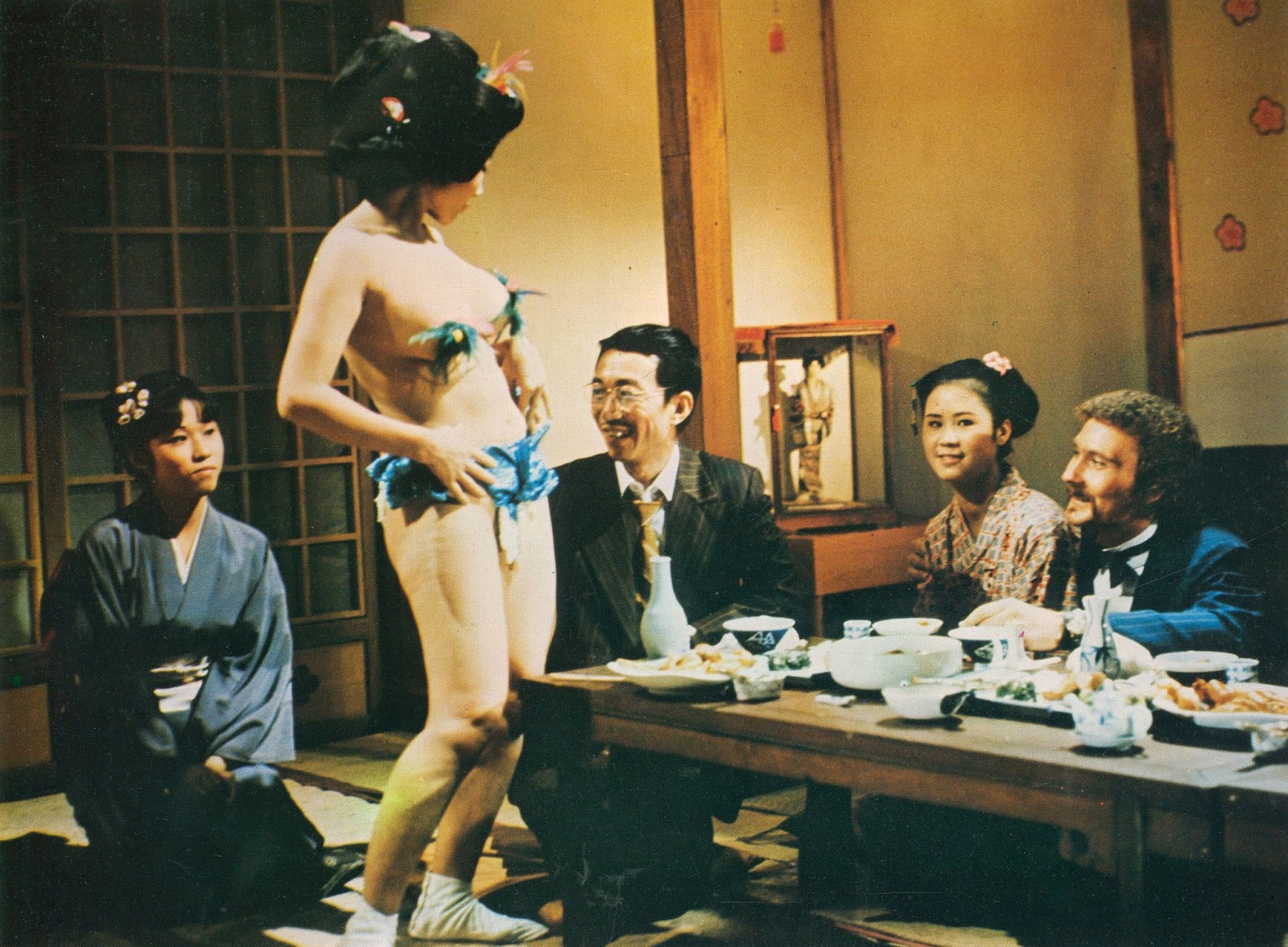
Dancer in Fist of Fury 1972

Bruce Lee kicks ass again! Essential viewing for fans of the genre and the man himself Bruce.

3/5 stars

Purchase Fist of Fury on Amazon: Blu-Ray - DVD - Bruce Lee Collection

Friday, March 29, 2013

Women in Cages (1971) Review

Women in Cages poster
Director: Gerardo de Leon
Stars: Pam Grier, Roberta Collins, Judith Brown
Genre: Exploitation

A sort of spiritual successor to The Big Doll House, which came out only months earlier. It features much of the same cast (Pam Grier, Roberta Collins, Judy Brown), the same producer (Roger Corman) and it also shares a near identical plot and set of characters. I suppose the question then is, which is better?

The plot follows, as you may expect from a film of the Women in Prison subgenre, women in prison who wish to escape. In this particular case (as with The Big Doll House) the prison is run by a sadistic lesbian guard (played by Pam Grier, in a reverse role from last time). Throw in some stuff about heroin and prostitution and you've got yourself a prime exploitation picture!

In many ways Women in Cages is better than The Big Doll House, but in some regards it's worse. First off the cinematography and general imagery is much better here. I daresay that Gerry de Leon was a bit more competent of a director than Jack Hill in that area. So, in turn, we get a film that actually looks pretty cool. 

The acting, as is to be expected, isn't exactly great. But any exploitation fan will be happy enough seeing the likes of Pam Grier and Roberta Collins on screen at once. So though the acting may be b-grade, the cast is definitely good...if you're a fan of course.

Roberta Collins in Women in Cages

There's not quite as much nudity in here as you may expect from a film about a sadistic lesbian and a prison full of women. Which, I suppose, is a bit disappointed for a film titled as such. The mud-wrestling and food fights of The Big Doll House certainly has Women in Cages beat when it comes to the tits-and-ass department.

The film is mostly without a score but what little soundtrack there is is pretty decent.

Pam Grier in Women in Cages

It's not a terrible exploitation flick and it's pretty enjoyable throughout. Watch it for the legendary Pam Grier and the beautiful Roberta Collins. For fans of the genre only. 

2.5/5 stars

Purchase Women in Cages on Amazon: Blu-Ray - DVD - Stream - VHS

Wednesday, March 20, 2013

An Analysis of The Master (2012)

The Master poster
[part of a series in which I closely examine and dissect a particular film]

Director: Paul Thomas Anderson
Stars: Joaquin Phoenix, Philip Seymour Hoffman
Genre: Psychological Drama

Please keep in mind that this is an analysis of the film and not a review. I will not be covering things I normally cover in my reviews. It is opinionated and merely my interpretation. It is primarily for those who have already seen the film and does contain major spoilers.

Freddie Quell (Joaquin Phoenix) is a former member of the U.S. Navy of WWII. He also happens to be a sex crazed alcoholic with more than a few mental issues and is, in all possibility, quite insane. The natural assumption would be that he is shell-shocked and traumatized from the war (he later states that he did in fact kill Japs in the war) and he is having trouble, as many soldiers had, readjusting to society. This, to me, is too simple and typical of an explanation. This film is more than just a character study of a veteran. 

I think Freddie's problems go much deeper than the war. Much earlier. This is evidenced by three things we find out about Freddie that reflect his current behavior: (1) his mother was psychotic and institutionalized, (2) he had incest sex with his aunt numerous times, (3) his father was a drunk and died because of it. Each of these three insights into Freddie's past quite blatantly make-up much of his own character today. I think it is quite easy to assume that Freddie comes from a broken home, a very disjointed family. This leads to my next conclusion: that The Master is about Freddie and his quest for family, stability, belonging, and companionship. In a dream that Freddie recalls he was just sitting with his mother and father at a table and talking, having a good time. This is what Freddie wanted--a happy family--and it's the one thing he had the most trouble finding. 

I suspect that Freddie joined the Navy in hopes of finding a family there. I suspect he failed, or perhaps he did find a family but only temporarily. Or maybe he found a family and companions and a sense of purpose only to have it all taken away whether it be through death, the end of the war, etc. The details don't quite matter. The point is that years after the war ended Freddie was a dissatisfied alcoholic who could still only think about sex and booze. 

Freddie worked as a photographer at a department store for a time. Constantly taking pictures of children and families and husbands and wives led him to finally snap, constantly reminded of what he wants but doesn't have. He is sex crazed because he wants to have someone but sex is the only way he can seem to go about it. He is an alcoholic not because he has a problem with alcohol, rather he is an alcoholic because he has other problems. 

Freddie then, seemingly by complete chance, meets Lancaster Dodd (Philip Seymour Hoffman) whom not only becomes a father figure to Freddie but also provides Freddie with a group to belong to and a "purpose." The film makes it very clear that Freddie isn't very much interested by "The Cause," he's only interested in having a family to be surrounded by. 

Joaquin Phoenix photographing in the Master

The film reflects and mirrors itself a lot. (Notice how every single poster for the film deals with mirroring in some way? see here, here, here, here, here, and here) Towards the beginning Doris, Freddie's old sweetheart whom he let get away, sings to Freddie. At the end of the film Dodd sings to him in a similar lullaby like way, albeit much more creepy and emotionally. Freddie photographed people for a living in a department store and later on he photographed Dodd. Lancaster Dodd, and to a lesser extent the rest of "The Cause," became his family. He didn't care about the beliefs, indeed he often showed that he thought it was all bullshit. I doubt that Dodd really wanted Freddie to be part of "The Cause." He perhaps was only keen on Freddie to satisfy his own psychological desires. 

The final reflection is one of the very first scenes and the very last one. In the beginning we see Freddie humping and fingering a sand sculpture of a woman. The very last thing we see in the film is Freddie cuddled up with that same sand woman, with a look of bliss on his face. Further evidencing the fact that Freddie isn't necessarily after sex, but rather company. 


Freddie Quell sand woman The Master

What Dodd represents other than a father figure I'm not sure. Perhaps Lancaster Dodd is religion, members of "The Cause" are blind followers, and Freddie is someone who isn't concerned with the truth but instead with his own comfort. Freddie could also represent religious fanaticism, or, better put, religious militarism. Even though Freddie himself is unsure whether he believes in "The Cause" he is still quick to take down any one who opposes it. He throws a tomato at a man and later goes to his home and attacks him just because he spoke out against what Dodd had said. He attacks the policemen who arrest Dodd. He attacks a man who criticized Dodd's book. 

I also cling on to another theory that I've seen thrown around a bit, and is also reflected in many of the posters for the film. That Freddie is one of Dodd's past lives. Whether you want to take that literally or metaphorically is unimportant, but "The Cause" directly deals with past lives and people's past, so there is a connection. This theory is supported by a few points: Dodd feels that he met Freddie before but he can't remember where. Dodd also seems to be the only one that can drink Freddie's potions and survive (whereas earlier in the film a farmer drank it and died; a would-be pretty pointless scene without this theory). It's small connections like that, and also the fact that much of Dodd's life and psych is similar to Freddie's (though they may at first appear opposite). 

If Dodd is the next incarnation of Freddie (or, if that theory is too hard to subscribe to, then perhaps Freddie just reminds Dodd much of himself when he was younger. Either way works.) then we can deduct that Dodd also desired a belonging and a family, which he of course found, or rather created, with "The Cause," which even his own son realizes is nonsense. Is Freddie, then, destined to end up like Dodd? Will Freddie seize the concocting of alcoholic potions and instead take up the concocting of false doctrines? Poisoning people not with liquor but with words? Will he lose his desire for sex and instead develop a desire to be followed, worshiped? Or has Freddie, in meeting Dodd, altered his destiny? I really don't know. 

Freddie Quell in The Master

A final word on the film: one scene I really liked was when Dodd was dancing and suddenly all the women became nude. Common film language would tell us that we were seeing the world from Freddie's sex crazed mind. The camera cuts between the room of nude women and close-ups of Freddie's face. But, upon a second viewing, it is Dodd's wife Peggy (Amy Adams) who really steals this scene. She only appears in the background and is only in focus half the time, but the emotion in her face tells us that the scene is just as much about her as it is Freddie. Perhaps Freddie sees all the women in the room naked because he is fantasizing about having sex with them. But Peggy too sees the same thing because she is thinking of all the potential threats to her husband's loyalty. This is supported by the two scenes that preface and follow the naked women scene; the former being Peggy's jealous face as Dodd praises another woman (this scene also includes Dodd's daughter cheating on her husband with Freddie, further pushing the theme of betrayal), and the latter when Peggy gives a vicious handjob to Dodd in the bathroom, domineering him, commanding him, possessing him. Could it be that Dodd is not the Master, but in actuality he is mastered by his wife, just as he desires. Could it be that The Master is not a film about someone who is the master, but a film about men who desire to be mastered?

Purchase The Master on Amazon: Blu-Ray - DVD - Stream

Monday, March 18, 2013

The Wasp Woman (1959) Review

The Wasp Woman poster
Director: Roger Corman
Stars: Susan Cabot, Anthony Eisley, Barboura Morris
Genre: Horror, Science Fiction

A Roger Corman B-movie from the 1950s, released only a week or so after his fantastically classic A Bucket of Blood.

The film is about some scientist who invents a serum that can make people young again...or something like that. So a cosmetics company wants to sell this product and the owner of the company is so enthusiastic about it that she allows the serum to be tested on herself. It works and she becomes young again...but the big side effect is that she occasionally turns into a blood thirsty wasp.

The film obviously find its inspiration from The Fly (unfortunately it's nowhere near as good as it). The story is of course bogus and nonsensical, the characters and writing doubly so. 

The special effects I can't really call bad. They were pretty okay for a 50s horror flick. The wasp woman didn't look much worse than the fly did in The Fly. (Aside from some moments where you can see the white of her neck or wrists). The problem is we only see the wasp woman twice and for only a few seconds. So most of the film doesn't even have any special effects or cool make-up. Which actually makes the film pretty slow and boring despite its short running time.

There's not much camp value here either, which I suppose is partly due to the fact that the special effects are so infrequent. I'm sure it's a movie that can be giggled at, but there's nothing overly cheesy or ridiculous in here. Which, again, makes it pretty boring. 

Although you have to love the poster for this film. It shows a giant wasp with a woman's head, but the movie actually has a woman with a wasp's head. Oh, how I love you b-movies and your misrepresenting posters!

The Wasp Woman doesn't have much going for it; no camp value, no actual value, infrequent effects, and a slow and boring story. There is one thing I can compliment though, and that is the excellent musical score by Fred Katz. The score was originally used in A Bucket of Blood, and Corman used the same score for many of his later films as well. The story is that apparently every time Corman hired Katz to do score one of his films Katz gave him the same one and Corman never noticed. Nonetheless it's a pretty cool score and it's nice to hear in this.

The Wasp Woman monster

Susan Cabot, who played the lead role, has a bit of an interesting real-life story to her. This was the last film she made before she was beaten to death by her own son, a mentally troubled dwarf, with a weight lifting bar. It's a pretty odd way to die. There's supposedly a biopic in development about Cabot to be directed by Stephan Elliott and star Rose McGowan. Now that's something I'd like to see.

The film was originally 60 minutes long but Jack Hill later directed an extra ten minutes for the film in order for it to be shown on television. Some sources credit Monte Hellman as the one who directed the extra ten minutes of footage but others say it was Jack Hill. Not sure which is correct and if anyone can clear that up in the comments it would be much appreciated.

Susan Cabot in The Wasp Woman

It's a minor film for the king of b-movies Roger Corman. He has many better films and this is really only worth watching for big fans of his. Although it can be a good way to waste 70 minutes.

2/5 stars

Purchase The Wasp Woman on Amazon: DVD - Stream - Corman Collection

Friday, March 15, 2013

Gummo (1997) Review

Gummo poster
Director: Harmony Korine
Stars: Max Perlich, Chloe Sevigny
Genre: Black Comedy

Harmony Korine's directorial debut, having previously only done the screenplay for Kids, and perhaps his most well known film. Certainly an interesting one. 

Gummo definitely doesn't follow a traditional narrative or plot. It instead features a series of sort of vignettes with people in a backwoods town. You'll see hillbillies wrestling chairs, kids killing cats, and that sort of stuff. 

To comment on Gummo's story would be to comment on something that doesn't exist. What Gummo does, through its imagery and glimpses into these random people's lives, is create a universe rather than a story. For 89 minutes Xenia, Ohio becomes your residence. These odd people become your neighbors. The things that happen become the things you see out of your own window. That's what Gummo achieves, it creates a world. Whether it's an immersive world or not doesn't really matter because the film still forces you to observe these people. Whether you feel at home or afraid, either way the film still achieved something by putting you there. It's the stories of these regular (though very odd) people's lives, and, as we know, regular, ordinary people usually don't have much of a back-story to them; they just exist. And so their existence we observe. 

There's not much else to say about Gummo. It's been reviewed to death by both admirers and its dislikers. It's a film better experienced than read about. Aside from doing a great job in creating a Universe, a film world which many of are not familiar with it also has a pretty awesome soundtrack. You have songs from Buddy Holly, Madonna, Electric Hellfire Club, Roy Orbison, and they're all used to great effect. Each song, I think, really does well to capture the emotion of a scene. 
Bunny Boy in Gummo

I won't spoil anything (it's kind of hard to spoil anything in a film like this which is just a compilation of scenes mostly unrelated) but there is one scene in this film that I just absolutely love. And no, it's not the infamous bathtub scene. It's towards the very end of the film. It's the scene that just cuts to Bunny Boy making out with the two blonde sisters at the same time in the pool while it's raining out with Roy Orbison's "Crying" playing over it. It may not seem like much, and it is indeed a very short scene (only a few seconds) but it really makes me feel fantastic every time I see it. I can't do a very good job of why I like this scene so much...I think what it does is capture bliss on camera. It takes these two sisters and pairs them with a character who had no interaction with them throughout the entire film. The film just intentionally skipped any bonding or development between the sisters and Bunny Boy and, without explanation, throws them together. It's actually quite intense. One of my all time favorite scenes. 
Chloe Sevigny in Gummo

It's a good film. An interesting one. An impressive one. And no doubt to many an extremely weird one (when the most normal character in a film is a gay black midget, you know you got something strange). You either hate Harmony's work or you love it. I lean towards the latter. 
3.5/5 stars

Purchase Gummo on Amazon: DVD - VHS
Related Posts Plugin for WordPress, Blogger...